

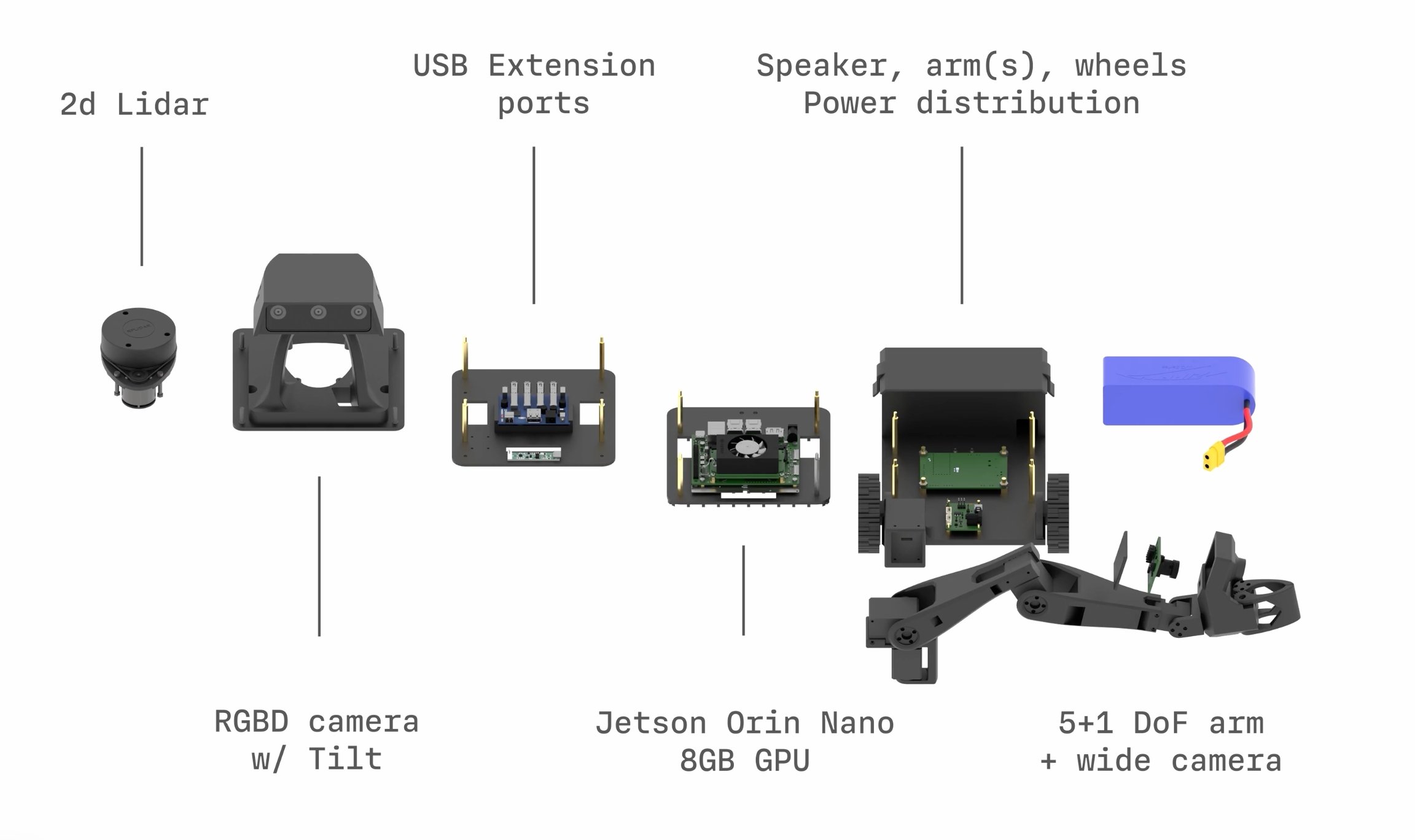
Hardware at a glance
Sensors
MARS combines complementary perception sources: a forward-facing stereo RGB camera that computes scene depth, a gripper-mounted RGB camera for close manipulation, and a 2D LiDAR for localization.Camera matrix
2D LiDAR
ROS2 Topics Reference
LiDAR data is exposed on
/scan as sensor_msgs/LaserScan (RPLidar stack).Custom sensors
MARS provides two powered USB 3.0 ports for additional sensors/peripherals.Arm
Specifications
Actuators
Seven Dynamixel servos (Robotis) drive MARS, numbered 1–7: motors 1–6 form the arm (motor 1 at the base, motor 6 driving the gripper) and motor 7 moves the head.Detailed motor specs
Detailed motor specs
All three models share the same 4096 pulse/rev encoder resolution — about 0.088° per step at the output shaft. The full electrical and mechanical specs are on the Robotis product pages linked above.
Onboard Computer
MARS ships with a Jetson Orin Nano Super 8GB Development Kit.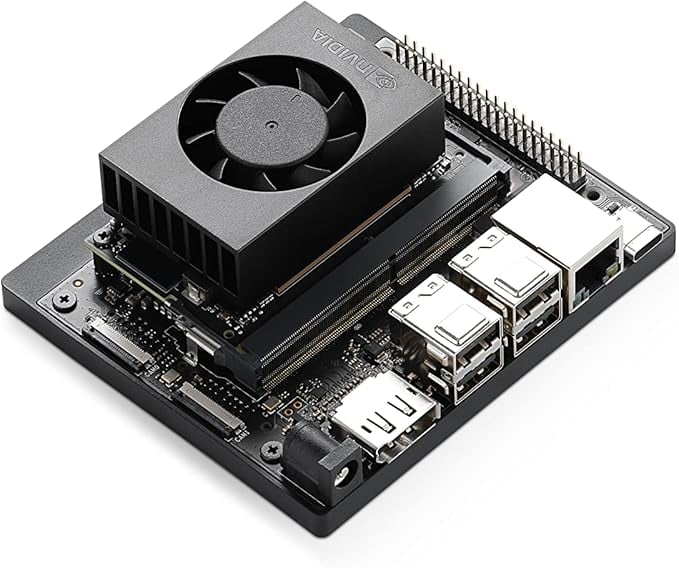
Innate also exposes two additional USB ports for user extensions after core system wiring.
Platform details
MARS is delivered assembled and calibrated so you can start quickly, while still being open and mod-friendly for deeper customization. Everything the robot needs at runtime runs on the robot — the VLA (Innate ACT), SLAM, and the Innate agent all execute on the Jetson, with the cloud only handling the model call and policy training. You need a computer to develop for MARS, but once your agents and skills are on it, you can close the laptop and walk away. You can buy an assembled MARS and access the open hardware/software repository:Innate Website
Buy assembled MARS units and find product information.
MARS Repository
Open-source hardware and software repository.